Saturday, August 10, 2013

Neon Skies to Dark Skies


After leaving Edwards AFB we spent a week in Las Vegas.  Driving over to Vegas we swung through Baker, CA to take a photo of the world’s largest thermometer and the Bun Boy Restaurant (opened 1926).  Unfortunately, the restaurant closed last year and so the thermometer is no longer working.  But, just in case you ever missed the sight, here you go.

World's largest thermometer.

Neither one of us is much for gambling, although I enjoy playing slot machines from time to time.  So I played for a while the first night we got to Vegas, lost my limit of $30 and headed for the door.  Another day I killed a few minutes while Heinz checked on reviews for a good pizza joint and managed a smashing win of $3.45!!  Yes, there is a decimal point in there…oh well, what can you expect on the penny slots?  And yes, I shared my winnings; I gave Heinz the 45 cents.  Heinz, on the other hand, kept his money in his pocket and avoided the temptation.

We did try out a few restaurants while in town (kind of required, don’t you think?).  Our first stop was at the Bellagio for the buffet.  We both had truly fond memories of this buffet, but it didn’t live up to our expectations this time around.  We had recalled it as having a wide variety of foods, prepared excellently, and a feast for both the eyes and the taste buds.  Alas, all excellent things must eventually come down to merely good, I suppose.  There simply was not quite as wide a variety of dishes and the flavors had definitely come down in the world, many of them tending toward the bland side.  There was still a great dessert island, although Heinz was disappointed that Crème Brulee was no longer a choice.  I ended the meal feeling like I had eaten at a slightly more upscale Golden Corral at three times the price. 

The Bellagio

Our second try at a buffet was at the Rio.  On both Yelp and Urban Spoon, the Village Seafood Buffet was listed as number one in Vegas.  Once again, it’s pricey, but WOW, was it good.  While the website boasts that it is “all seafood, all the time”, there are some carnivore choices: steak, chicken, sausage, ribs; but, oh my, that seafood! Hot and cold Alaskan King Crab, boiled crawfish, oysters, mussels, paella, shrimp--boiled, in enchiladas, dim sum, salad, fried, you name it, lobster tails fixed 3 or 4 different ways, various types of fish fixed just about any way you can imagine, sushi, sashimi, and on and on.  The dessert choices included Heinz’s Crème Brulee and 15 different flavors of freshly made gelato.  I went for the mango and if I hadn’t been already considering loosening my pants from all the crab I would have gone back for more.  If you’re heading to Vegas and like seafood, DO NOT MISS eating at this buffet!

The Rio

We didn’t do a whole lot while in town, too hot during the day, and usually too lazy at night, but we did spend one night wandering around the strip with our cameras, checking out the photo opportunities with all that neon and color.

Neon splashes on Las Vegas Blvd.

Neon reflections on the Trump Tower.

The Flamingo's time-tested sign, designed in 1946 when the casino first opened.  The Flamingo was the third casino opened and currently the oldest operating casino in Las Vegas.

Side of the Flamingo Casino.

What a great combination of colors!

The Paris Hotel's famous hot air balloon.

In addition to wandering the streets we drifted into a few of the hotels and casinos to view the decorating schemes.  We went into the ever-popular Caesar’s Palace, Paris, and The Bellagio. 

Entrance to Caesar's Palace.

Snail in the Paris gardens.

Chihuly ceiling in the Bellagio lobby.

Then we decided to check out a new hotel/casino (at least new to us) - the Aria.  This hotel and the attached shopping area are absolutely fabulous - sleek, modern, and filled with unique displays of art.  The architecture and interior design are just fantastic!  From the moment you see the building’s exterior you know this is not a run-of-the-mill, themed Las Vegas casino.  It might be worth it to go back to Vegas and check in, just to see what a room looks like.  If you decide to try it out, take photos and send them to us!

Exterior of the Aria Hotel and Casino

Starbucks in the Aria.

“Tornado” water columns, moving your hands around the outside of the column causes the water to twirl up in a waterspout.


Waterspout up close.

Water walls inside the hotel.  There are multiples of these that have water running between colored glass panels.

One day while driving home from running some errands I noticed a sign for the Neon Boneyard.  Being rather intrigued, I checked it out on-line and found that it is The Neon Museum of Las Vegas.  Run by a non-profit organization, the museum is dedicated to collecting, preserving, and restoring neon signage of Las Vegas.  The group rescues old signs that would have become just so much scrap metal and moves them to the Neon Boneyard.  The museum has both day and night tours, so Heinz and I opted for a night tour, figuring that it would have more photo opportunities.

The Neon Boneyard.  All the letters in the sign are from discarded casino signs.


The sign at night.

We learned quite a bit during our tour. Neon signs in the city are not owned by the enterprises that display them, but are rented from lighting and signage companies.  Therefore, when a business wants to delete or update a sign, they call the signage company to design and install a new sign, and then remove the old sign.  These companies strip the old sign of toxic materials and any usable parts such as bulbs, wiring, etc. and scrap the rest. 

As advertising technology changed in the 1990’s more and more casinos and businesses were converting their neon signs to digital imagery and other computerized signage.  The city of Las Vegas was determined not to lose the ambiance that neon signage gave to the strip and passed a law that 75% of signage must be in neon.  

The Museum has over 150 restored and un-restored neon signs from some of the city’s most celebrated properties dating from the 1930’s to the present day.  You can only view the collection on a guided tour due to safety concerns - but, it is worth a look.  The museum does offer senior, military, and student discounts.

Entry sign from the old Horseshoe Casino.

Casino entryway sign from the Sahara Casino (now closed).


The old Lido Club sign.


Neon bulb close-up.


A letter from a 1940’s era motel sign.  The pipes standing out from the sides are of iron and were how the workmen climbed up the signs to change bulbs or touch up paint, often several stories in the air.


1950’s era sign.


Sign letters waiting placement.


Derelict for now.

Restored sign from the Stardust Casino.


Awaiting restoration.


Hotel sign from the 1960's.  The museum's reception area is located in the lobby building of the old La Concha Hotel.

Restored neon sign from a long-ago nightclub.


Sign from the Yucca Hotel, closed in the 1960's.

In addition to the boneyard signs, the museum has restored neon signs from Las Vegas’ by-gone days and placed them in the medians along Fremont St. and Las Vegas Blvd.  This project is on going and the museum has several signs in various stages of restoration.  The eventual goal is to have old historic signs all along the strip.

Restored martini glass.

Cleaner's sign from the 1940's.

Horse and rider from the original Horseshoe Casino.

On our last night in town Heinz and I were craving ice cream and he hopped on-line to find out where the best ice cream was to be found.  With no time to spare, we hopped in the car and headed for La Flor de Michoacan.  There are five locations for this ice cream company in Las Vegas.  We went to the original location on Eastern Ave, a small hole-in-the-wall shop in a somewhat rundown strip mall.  To say that we were the only English speaking couple in the place is not exaggerating - even the staff spoke very little English.  But between smiles, hand gestures, and butchered Spanish on our part, we got our order, and some of the best blackberry ice cream I have ever eaten.  Heinz decided on mango, which was very good as well.


La Flor de Michoacan

I don't have a friend of the day from our time in Neon City so I guess I'll just leave you with a couple of shots to tease you with our upcoming adventures in the Dixie National Forest in Utah.  We're spending three weeks there and so far are having a great time - our main achievement so far is taking over a week to get over a couple of severe head colds...sigh...

Looking over the Dixie National Forest towards Zion National Park.

What a nice backyard!



Thursday, July 25, 2013

Family Time in L.A.


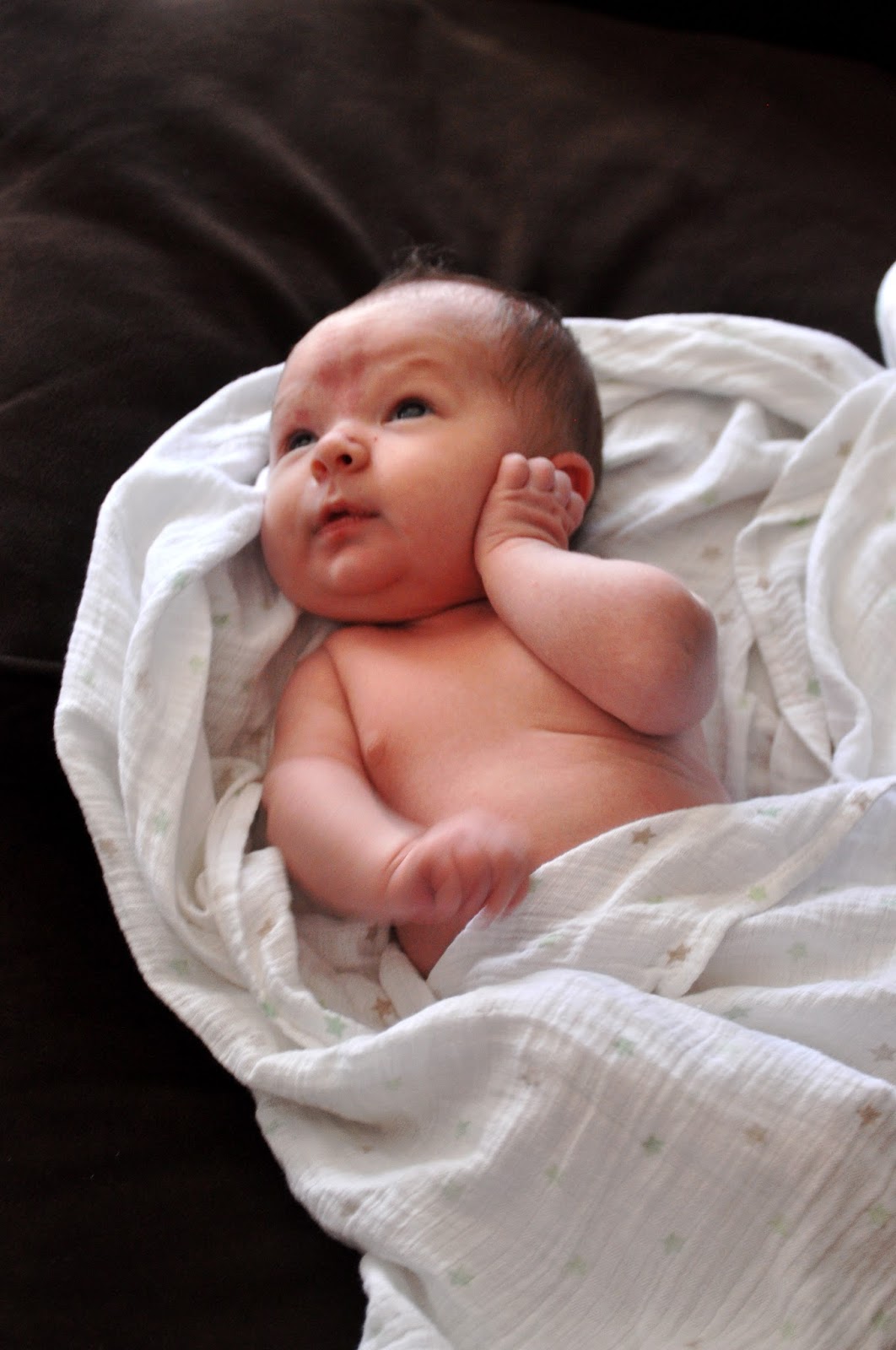
Thanks to all who’ve been emailing to congratulate us on our newest family member.  The past couple of weeks have been quite the family extravaganza.  Over the past two weekends Grandparents Deb and Bill came in from Las Vegas, Tante Tash flew in from Pennsylvania, and Grandparents Wayne and Betsy arrived from New Hampshire.  Jess and Pete were very tolerant of all the family members flocking in to pay homage to Nora - despite being tired and still a little overwhelmed with the new addition to their home.  On the other hand, Nora was quite the little lady, saving her fussy moments for Mom and Dad – how considerate! 

Of course, there was never a moment when a camera wasn’t out with shutters snapping - usually mine!

The star of the show, Nora Mae.

The new family, Pete, Jess, and Nora.

Grandma (Deb) getting in some cuddle time.

Grandpa (Bill) holding precious cargo.

Tante Tash and Nora meet for the first time.

Naptime for Opa (Heinz) and Nora.

Nana (Betsy) checking for dimples.

Pure joy from Poppi (Wayne) over his first granddaughter.

And of course, Oma (me) got her turn snuggling in with the star.

Everyone debating politics... or the Nora cuddling schedule!

When we weren’t busy cooing and making silly faces at Nora, Heinz and I managed to fill our time. 

One day we drove over to Rancho Palos Verdes to see the Wayfarers Chapel.  The church, built in 1951, is on the National Registry of Historic Places.  It is sponsored by the Swedenborgian Church and is made almost entirely of glass. 

Lloyd Wright (son of Frank Lloyd Wright) designed the chapel and surrounding gardens.  He used only 30 and 60-degree angles because they occur naturally in snowflakes, crystals, and tree branches.  Redwood pillars rise from interior stone planters like giant tree trunks.  The plants in the planters were chosen because they are found on the forest floor and are intended to make the exterior and interior spaces one.  The trees on both sides of the exterior of the chapel are coastal redwoods.  The stone capping the altar is a variety of Palos Verdes stone called moss back. 

The Wayfarers Chapel

Indoor columns of redwood with interior plantings.

Coastal redwoods line the outside of the chapel.

It was a little weird to see the following sign on the way to the chapel.  Seems the local area is not the most stable ground in California.

Gosh, can't wait to travel this section of the highway!

On another day we checked out the Tattoo Expo at the Fairplex in Pomona - our first ever tattoo event.  No, we did not get one, but we did see some really bad tattoos, as in, “What in the world were you thinking when you got that?”, bad.  But there were also some really terrific tattoos walking around.  It’s not really our thing, but we could appreciate the art.

Adding more tropical flowers.

Patience and a tolerance for pain are virtues in this type of art.

On the way into the Expo we spotted an outdoor model train display, so of course we had to stop in and see what it was all about.  Turns out that the Fairplex Garden Railroad is considered the oldest miniature railroad in the U.S.  It began in 1924 as a static display for the Los Angeles Fair.  By 1935 it had morphed into a hand-built operating train in 1/2- inch scale and had moved into its current 100 x 300 foot outdoor location.  In 1997 members of local miniature railroad clubs replaced the original display with G-gauge model railroads and trains.  There are over 9,800 feet of track, and up to 30 trains can run at one time.  According to the website, there are approximately 2,000 linear feet of underground pipes and conduits to support the operation and nearly 18 miles of electrical wiring.

The theme of the display is the history of California and the role of the railroads.  The exhibit depicts scenes of mining, logging, mission life, business and residential development, industrial areas, and oil drilling.  The railroad runs through mountains, farmlands, lakes, rivers, towns, and deserts.  There is a working switchyard to move cars and engines between trains, load and unload cargo, and all the other activities of a railroad yard. 

If you love model railroads here’s a link to a great view of this one from the viewpoint of the engine: www.youtube.com/watch?v=XSKxp9PhTWY


Old West town along the railroad.

A vintage train moving on down the tracks.

A more modern train heading west.

Heinz checking out the switchyard.

We are always looking out for the fun and unusual, but never expected to find it while hitting a drive-through for breakfast.  Check the fancy wheels on the vehicle in line ahead of us.  Turns out that just down the road from the Navy Base (where we were staying) was Leisure World - a retirement community.  Apparently the smell from the fast food restaurant is too much at times, and appetites MUST be quenched.

Styling through the Carl's Jr. drive-through - yes, there is even a dog on her lap.

We took two drives along Mulholland Drive, one by motorcycle and one by car.  We've heard a lot of oohs and aahs over the years about this drive - but we found it to be a bit of a let down.  The road travels through the Santa Monica Mountains and is featured in movies, songs, and novels.  It opened in 1924, built by developers investing in the Hollywood Hills residential site.  The road is 22 miles long, mostly two-lane, and connects two sections of U.S. Route 101.

Our first drive was by motorcycle along the Mulholland Highway portion, and Heinz and I had to stop at the Rock Store.  This is one of the most famous biker hangouts in the world - located halfway between Malibu and Calabasas.  The building is made of volcanic rock and was built as a stagecoach stop circa 1910.  In 1961 Ed and Vern Savko bought the building and turned it into a small grocery.  Over the years the motorcycling community discovered it as a genial place to stop while riding the winding road and the Savko’s eventually closed the grocery and turned the building into a small café and bar.

The Rock Store


Our second drive was by car along the Mulholland Drive portion, between the Hollywood Bowl and I-405.  The route does offer spectacular views of the Los Angeles Basin, the San Fernando Valley, and the Hollywood sign, but you have to stop at the various vista points to see these views.  While it is home to some of the most exclusive and expensive homes in the world, they are set back from the road and seldom seen. 

Overall, the general opinion of Heinz, Tash, and me was “ok, been there, done that, it’s a non-event,” although Pete and Jess assured us that it is much more spectacular in the winter when the smog has blown out and the foliage is greener.

Hollywood sign from a Mulholland Drive overlook.  The sign originally read Hollywoodland and was created as an advertisement for local real estate development in 1923.  It was preserved after the movie industry made it big in Los Angeles.


Los Angeles Valley from Mulholland Drive.

Tash and Heinz picking out familiar landmarks from a Hollywood Bowl overlook.

Of course, I had to make a pilgrimage the Long Beach Farmers Market and went just a little bit crazy with all the fresh fruits and vegetables picking up fresh nectarines, asparagus, local wildflower honey, potatoes, and on and on.  And then I saw them…Maui onions…absolutely HAD to buy a couple.

Maui onions with a large yellow onion in the middle.  So what do you do with a 4 lb. onion?

Caramelize it and make an onion tart of course.  There was enough in one Maui onion to make a tart, an omelet, and still have half left over to tuck into the freezer for another day.

Our last expedition was down to Olvera Street.  This is the original old town of Los Angeles.  The area was designated a California State Historic Landmark in 1953.  It is a quaint and colorful area and celebrates the Mexican culture of Los Angeles’ past.  There are over 80 shops, vendor stalls, and restaurants along this 4-block street.  Tash, Heinz, and I stopped in at La Golondrina Mexican Café for tasty food and nice margaritas, followed by some strolling and shopping among the shops and vendors.

Tash and her pomegranate margarita.

Colorful vendors along Olvera Street.

Lucha libre (Mexican wrestling) masks for sale.

Shop on ladies, I'll wait here in the plaza.

We’ve torn ourselves away from Nora and moved on to Edwards AFB again, for a few days of routine maintenance on the vehicles.  Heinz is also washing all the ocean salt off the rig, the car, and the motorcycle.  It’s hot here, but we missed the 105+ temperatures - it’s just in the high 90’s instead.  No problem, the air conditioners are working like a dream.

I’ll leave you with more photos of that amazing new grand-daughter instead of our usual friends of the day…

Hey, hey, HEY, that’s mine, give it back!


Uh Heinz... it's Betsy's turn to hold the baby.  Baby?  What baby?  I don't have the baby!

Humph! So this is what all the fuss has been about.  It can't even bark for heaven's sake!

Oh No! I just know you're gonna pull this picture out when my first date arrives to pick me up!!
  
Is she in there?  What’s she doing?


Whoa, you people are wearing me out!  Good Night!